
Cameron County Projected Versus Actual Release
TDCJ uses several dates that answer different questions. Parole eligibility marks when BPP may consider release. Projected Release Date is Classification and Records’ forecast for leaving incarceration if parole does not occur sooner. Scheduled Release Date and Scheduled Release Location may appear after a favorable legal or administrative event, a release certificate, and a records audit. Actual release is the completed custody exit.
A Cameron County pretrial detainee has no comparable fixed release date. A bond order may authorize release, but another hold can delay or prevent physical exit. The court order explains authority; the Sheriff booking-out record proves when Cameron custody ended and whether the event was release or transfer.
Find a Cameron County Projected Release Date
Begin by deciding whether the person is in a Cameron jail, a TDCJ unit, federal custody, or ICE detention. These systems do not share one date field.
- Check the official Cameron roster to identify a current or recent county booking and preserve the booking and SO numbers. The roster does not display a release date.
- Read the Cameron court docket and signed order for bond, sentence, commitment, dismissal, or revocation information.
- For a county sentence, ask the jail for its commitment and credit calculation and request the booking-out record when the exit occurs.
- If the court record shows state commitment, search the TDCJ offender search after the state accepts the person.
- Use the TDCJ number or SID when possible. Otherwise enter exact last name and at least the first initial, then refine with first name, gender, and race.
- Read parole eligibility, projected release, parole-review status, and any scheduled date as separate fields.
- Confirm the planned date with the unit before travel and use IVSS, Parole Division, or a release certificate after the online current-inmate row ends.
The Cameron County release-record guide covers the county booking-out request and transfer destinations in more detail.
TDCJ Dates for Cameron County Prisoners
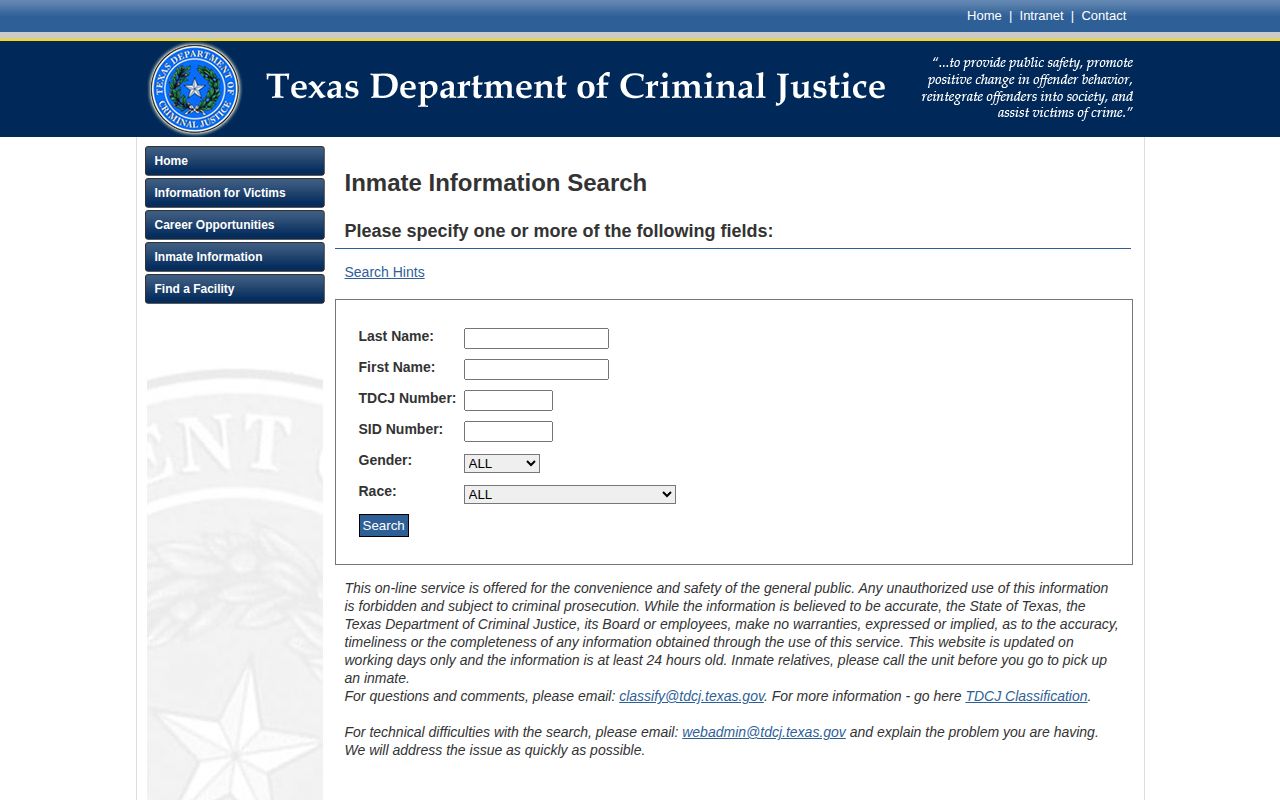
The TDCJ online search covers current TDCJ inmates only. It is not a comprehensive archive of released or discharged people. A current detail may contain the unit, offenses, sentences, sentence-begin date, maximum sentence date, parole-eligibility date, projected date, parole-review status, and later a scheduled date and location.
| TDCJ field | What it means |
|---|---|
| Sentence begin date | Starting point shown for the state sentence calculation |
| Maximum sentence date | Sentence endpoint before a qualifying earlier release |
| Parole eligibility date | First review eligibility under applicable offense and date rules, not an approved release |
| Projected Release Date | TDCJ forecast if parole does not occur sooner, shaped by mandatory-supervision eligibility |
| Parole review status | BPP process or last decision, not a physical-exit record |
| Scheduled date and location | Later processing fields after certification and audit; still subject to change |
The official TDCJ search states its fields and current-incarceration limit. This captured source shows why a vanished row must not be called a discharge.
Texas Defines Projected Release Precisely
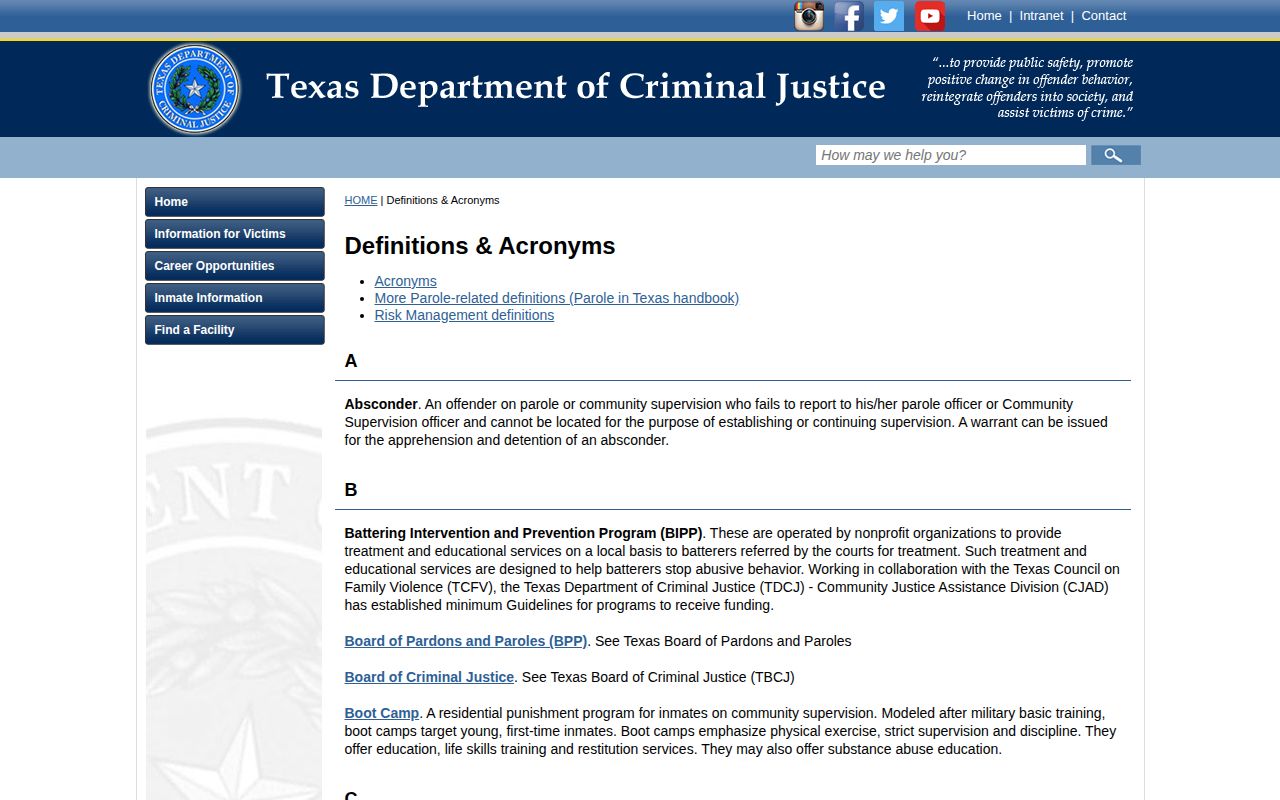
TDCJ’s definition ties the projection to Classification and Records calculations and to whether parole happens sooner. For older eligible offenses before September 1, 1996, mandatory-supervision timing generally reflects flat time plus good time equaling the sentence. For eligible offenses on or after that date, arithmetic alone does not cause release because BPP must approve discretionary mandatory supervision.
The TDCJ definitions page is the controlling source for Projected Release Date and related terms. The image below captures the state definition rather than applying a generic sentence calculator.
If BPP denies discretionary mandatory supervision, the forecast can move toward maximum expiration or discharge. A later approval can move it earlier. For an offense that is ineligible for mandatory supervision, the projection ordinarily tracks maximum expiration unless parole occurs.
Cameron County TDCJ Good-Time Rules
Texas Government Code §498.003 authorizes good-conduct time based on classification and participation. It includes up to 15 days for each 30 days actually served for diligent participation in specified work, agricultural, educational, or vocational programming. Section 498.004 permits forfeiture. Credits affect eligibility and calculations; they do not automatically shorten the judicial sentence or guarantee release.
Government Code §508.145 supplies offense and date-specific parole formulas. For serious offenses listed in Article 42A.054 or a qualifying deadly-weapon finding, the familiar threshold generally uses actual calendar time equal to one-half of the sentence or 30 calendar years, whichever is less, without good time counted toward that threshold. Many other cases generally use calendar time plus good time equal to one-fourth of the sentence or 15 years, whichever is less, subject to exceptions.
Eligibility only opens review. BPP may deny parole. Government Code §508.149(a) also lists exclusions from mandatory supervision. “3g offense” is historical shorthand; Article 42A.054 is the current reference.
What Changes Cameron County Release Dates
A projected date can move because the inputs and legal status change. The reason should be traced to a current agency record, not inferred from a prior forecast.
| Factor | Possible effect |
|---|---|
| Good-time earning | Changes an eligible TDCJ calculation or review timing under the governing rules |
| Credit forfeiture | May move a projection later under §498.004 |
| Parole approval | Can produce an earlier release path once prerequisites and certification are complete |
| Parole or mandatory-supervision denial | Can move the expected date toward a later review or maximum expiration |
| Required program | Conditional FI decisions may delay release until completion |
| Detainer or hold | May send the person to another custodian rather than the community |
| Court order or sentence correction | Can change the authority, sentence, or credited time used in the calculation |
| Release-certificate audit | Can alter the scheduled date or location during final processing |
A favorable FI vote is not a release timestamp. TDCJ may still need residence-plan acceptance, program completion, special conditions, a record audit, detainer resolution, and the release certificate.
Scheduled Release for Cameron County Cases
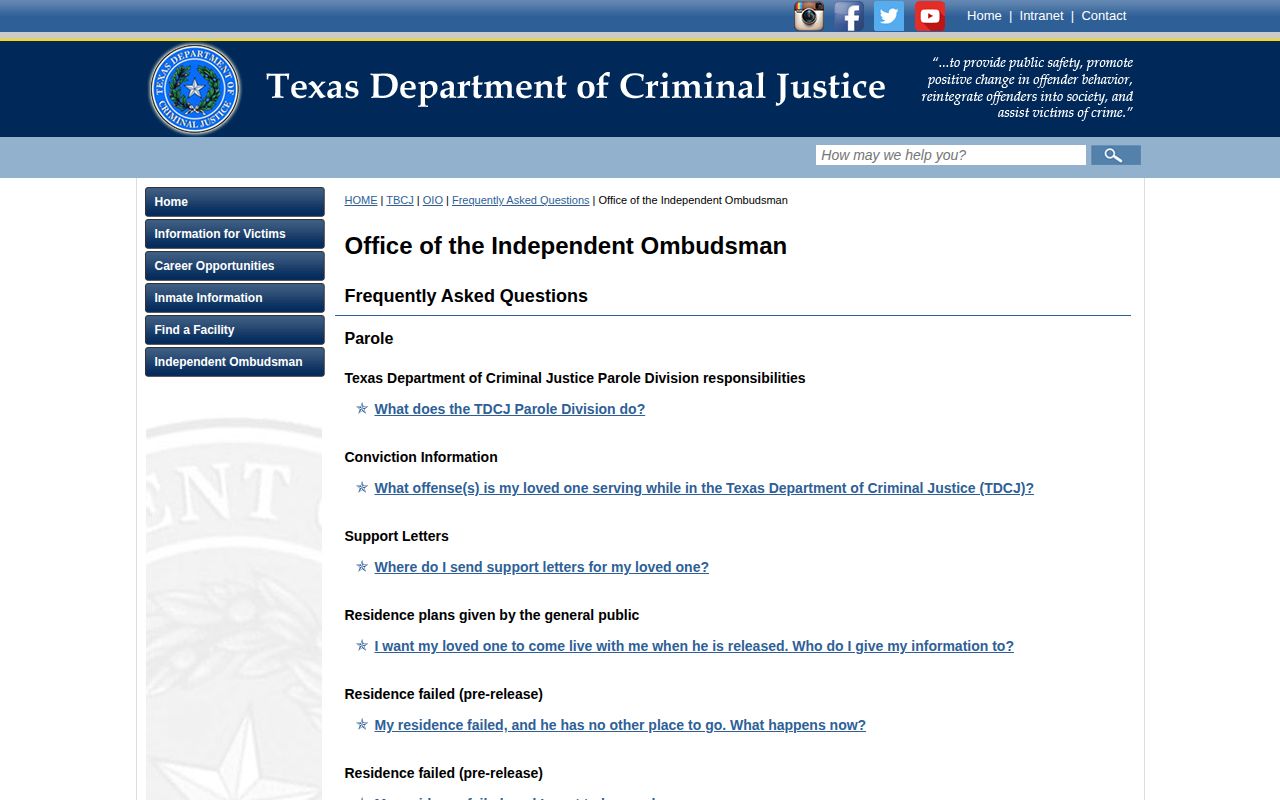
After the release certificate reaches Classification and Records and passes audit, TDCJ may post a Scheduled Release Date and Scheduled Release Location. Research places the ordinary audit interval at roughly 14 to 21 business days, with longer processing possible when a program or another prerequisite remains.
The TDCJ Ombudsman parole FAQ explains the scheduled date, location, and audit warning. This captured page is the best source for planning a pickup without mistaking a forecast for a guarantee.
The BPP Offender Status Line is 844-512-0461. Review and Release Processing lists 512-406-5202 for status after a favorable vote. These routes describe state processing, not a Cameron jail bond release.
Cameron County Jail Sentence Calculations
A local jail sentence must not be calculated with TDCJ rules. The Cameron jail must account for the signed commitment, calendar term, lawful county credit or commutation, jail credit, unresolved holds, and the judge’s order. Obtain both the signed judgment and the jail’s calculation.
Can a weekend or holiday move the Cameron release? No Cameron County weekend or holiday early-release policy was verified. Do not assume a date changes merely because it falls outside normal business hours.
The public Cameron roster is not a date tool. It shows a picture, booking date, defendant, booking number, SO number, and charges on a mixed current and prior-seven-days-housed list. It contains no release date, reason, destination, or explicit released flag. Its two-hour refresh does not promise a two-hour release lag.
A pretrial person also lacks a computed sentence end. Use the bond or release order for authority, call the jail for immediate confirmation, and request the booking-out sheet for the actual event. A court order can precede physical exit while staff resolve another hold.
Cameron County Transfer Is Not Freedom
A person can leave Carrizales-Rucker, Ruben M. Torres, or the Old County Jail for TDCJ, another county, USMS, or ICE custody. During a Cameron-to-TDCJ commitment, the county row may disappear before TDCJ working-day data accepts and displays the person. Repeated absence from both public systems is not evidence of community release.
Search the felony docket for the judgment and commitment, then request the Sheriff transfer disposition. Once TDCJ displays the person, preserve the TDCJ number for later date checks. If the booking-out record identifies ICE, use ODLS. If it identifies federal pretrial custody, use the Southern District docket and USMS contact because a BOP miss cannot prove release.
Confirm Cameron County Actual Release
As the expected date approaches, use the correct notification and confirmation route. Texas IVSS-Counties can provide supported Cameron jail events. The separate TDCJ IVSS covers state prisoners and people on parole or mandatory supervision. The Cameron County IVSS search guide explains current registration and the older VINE PIN distinction.
- Record the latest projected or scheduled date and the source retrieval date.
- Check for a later BPP decision, program requirement, hold, or schedule change.
- Call the TDCJ unit before travel, or call the proper Cameron jail for a local release.
- After the event, obtain the release certificate, Parole Division date, IVSS event, or Sheriff booking-out sheet.
- Name the destination agency if the event was a transfer.
When a current TDCJ online row disappears, do not label the person discharged. Use IVSS, Parole Division, or a formal request. TDCJ’s public-information email at pia@tdcj.texas.gov accepts a full name and seven-digit TDCJ number; without the number, provide exact date of birth or approximate age and county of conviction. It may provide projected-date and incarceration information at no charge, but no photograph.
The strongest final statement names the system exited, the actual date, and any receiving agency. That wording preserves the difference between a forecast, a completed release, and continued custody after transfer.